
With US$100bn losses now the norm, rising attachment points create new dynamic for cat programs
January 21 2025 by Marcus Alcock
Natural catastrophe tolerance for the (re)insurance market has shifted substantively in recent years, with losses in excess of US$150 billion now considered more meaningful to have an impact on the rating, according to commentators on the 1.1 reinsurance renewals.
Despite estimates of a bruising US$135 billion to US$140 billion natural catastrophe bill for the market in 2024 from the likes of Swiss Re and Munich Re, it appears to have had little impact in terms of limiting rate reductions on a number of programs in the property cat space across APAC.
According to Munich Re, the Asia Pacific and African region experienced total losses of US$91 billion from natural disasters in 2024, much higher than the US$66 billion in the previous year. Insured losses, meanwhile, stood at US$16 billion, compared to US$10 billion in 2023.
“For the fifth consecutive year, insured losses from natural catastrophes broke the US$100-billion mark,” Balz Grollimund, Swiss Re’s head of catastrophe perils, wrote in a report by the reinsurer. “Much of this increasing loss burden results from value concentration in urban areas, economic growth, and increasing rebuilding costs.”
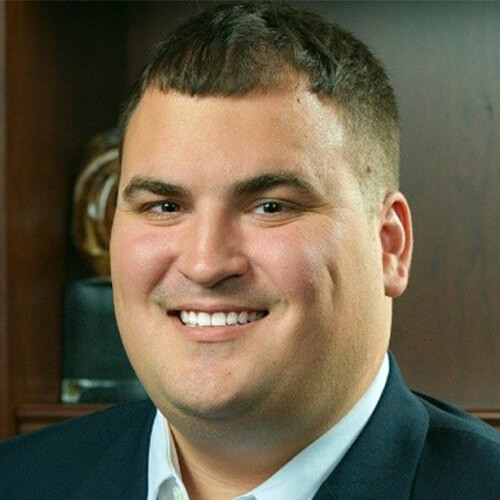
“However, US$100 billion impacts reinsurers much differently than it did three years ago thanks to the rise in attachment points.”
Dan Hofmeister, AM Best
In Vietnam, Typhoon Yagi was the most powerful cyclone since systematic local record-keeping began, and with total losses of US$14 billion, it was also one of the most expensive disasters of the year, although only around US$1.6 billion was insured.
In part, the increase stems from a revised approach to loss calibration, with one underwriter noting that models have been recalibrated and underlying exposures have been far better adjusted to current values, so modelled average annual losses are now in a much better position to reflect the new insured loss reality.
However, the scale of such losses has not appeared to have had a meaningful impact on program renewals.
Changing the scale
Dan Hofmeister, associate director at AM Best, accepted that industry-wide losses of US$100 billion “do seem to be the norm now”.
“However, US$100 billion impacts reinsurers much differently than it did three years ago thanks to the rise in attachment points,” he told InsuranceAsia News.
“In many cases, attachment points were up 50-100%, so one would think it would probably take closer to US$150 billion under current conditions to have an impact.
“That said, this could be influenced by a number of factors, including the size of the events themselves – e.g., 10 events of US$10 billion might not have any impact on reinsurers, whereas one US$100 billion catastrophe-related loss could be a capital event.”
Limited impact
According to global (re)insurance broking group Howden, risk-adjusted global property-catastrophe reinsurance rates-on-line decreased by 8% on average at this year's 1.1 reinsurance renewals, in comparison to an increase of 3% last year.
As previously reported, it was a buyers’ market in Asia, with even programs in loss-hit markets such as Taiwan and Vietnam demonstrating more modest pricing adjustments than previously expected.
 “The rate-on-line decrease is not very surprising: the industry suffered some losses, but the losses were typical loss events, such as Florida hurricanes that are accurately priced for. Despite these events, the industry remained profitable and capital growth remains strong," Hofmeister added.
“We would not characterise this market as soft, as much of the hardening witnessed in prior years was related to higher attachment points and stricter terms and conditions, of which we have not heard of significant changes in."
Hofmeister also suggested that property retrocessional capacity is once more readily available compared to the limitations of recent renewals.
“Retro seems to be aided by strong ILS markets," he said. “After another strong year for ILS with very little trapped capital, we are hearing that many investors have reinvested their gains into the market, likely driving down prices for retro and increasing supply.”
-
‘We must challenge the status quo’: insurance cycle no longer fit for purpose, risk management chief warns
- October 6
President Philippe Cotelle tells the Federation of European Risk Management Associations (Ferma) Forum 2026 in Rotterdam that insurers must change to remain relevant to global organisations.
-
El Nino changes risk conversation as Australian insurers scrutinise bushfire, flood exposure
- October 6
Industry sources say pricing and reinsurance are set with a longer-term view, with catastrophe models and scenario testing informing risk assessment rather than adjustments to individual climate cycles.
-
As APAC risk transfer market opens up, Marsh Re eyes parametric wind, bushfire cover
- October 5
Broker's Raincell flood solution for Australia signals broader parametric push, head of Catastrophe Advisory in Asia Pacific Jeremy Waite tells InsuranceAsia News.
-
Marine war risk challenges require central solution as mounting losses expose claims gaps: Markel
- October 2
Head of claims for Asia Bo Yu tells InsuranceAsia News that the 98 vessels that have been attacked in the Strait of Hormuz since February are driving calls for greater collaboration between hull insurers and P&I clubs.
-
Sedgwick | Captives in Asia: From Niche Solution to Strategic Risk Platform
Captive insurance has evolved from niche tool to strategic risk infrastructure in Asia, with connected claims data seen as key to unlocking its full value.
-
BlackRock | Rethink the rules: how TAA and ETFs are reshaping portfolio construction
BlackRock's Daniel Caderas and MSCI's Raman Aylur Subramanian explain why tactical asset allocation (TAA) and exchange-traded funds (ETF) have become essential as global markets fragment and static allocations lose their reliability.
-
BlackRock | Infrastructure comes of age for insurers
Are insurers capturing full value from the asset class? BlackRock shares its perspective.
-
PartnerRe | The missing life stage: why caregiving is reshaping the future of protection in APAC
To stay relevant, insurers should engage caregivers earlier with solutions that combine protection, navigation support, and preventative planning.