


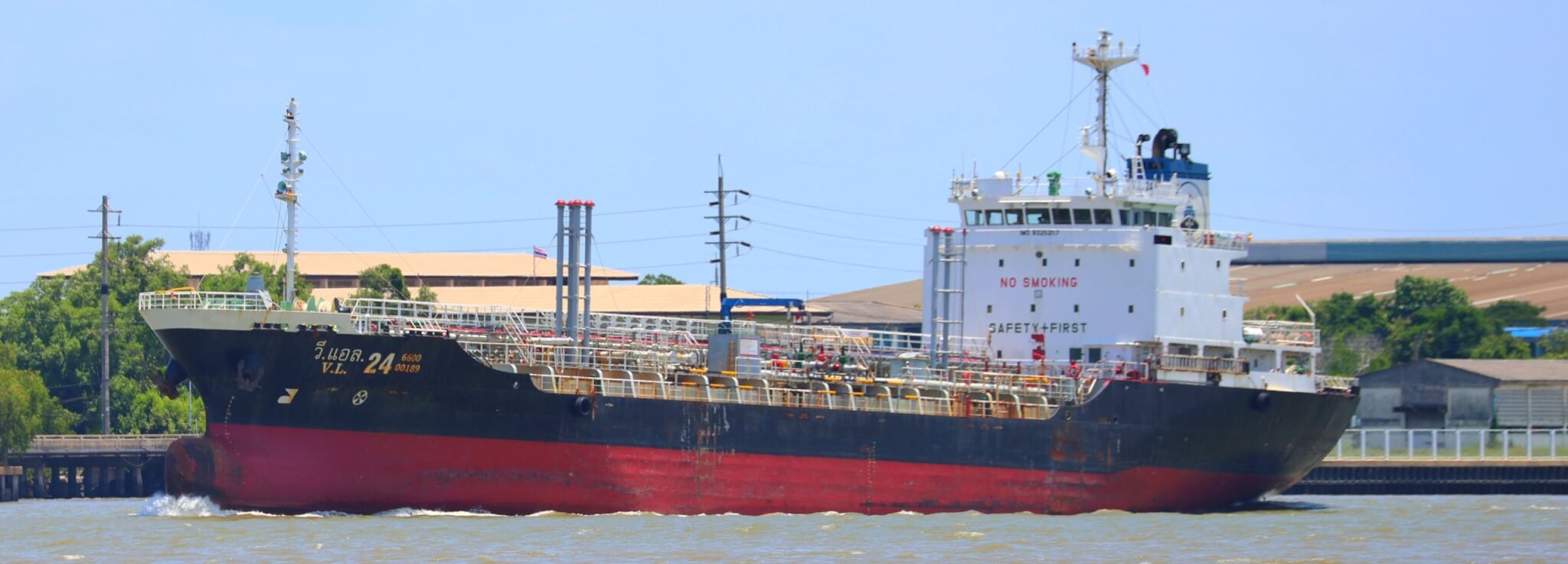
The global economy relies on a handful of critical maritime chokepoints. From the Strait of Hormuz and the Red Sea to the Suez Canal, these narrow but strategically vital waterways carry huge volumes of trade, energy and commodities. When geopolitical tension rises, the risks to vessels, cargo and crew rise with them.
For shipping companies, operating in these hotspots now means managing far more than bad weather, collisions and piracy. Missile strikes, drone attacks, GPS interference and cyber-enabled disruption have become part of the maritime threat landscape. In some cases, vessels have been left unable to proceed safely, with no viable alternative route, effectively becoming sitting ducks.
Some vessels are responding by switching off their Automatic Identification System (AIS) transponders and “going dark” to avoid detection. In August, 80% of traffic through the Strait of Hormuz reportedly made “dark transits” before reappearing on the other side.
While this may reduce exposure in some situations, it creates new risks. Shipowners, cargo owners and insurers can lose visibility of a vessel’s location and movements at the very moment danger and uncertainty are highest, making assets harder to monitor, protect and support.
From data theft to operational sabotage
A recent cyberattack on a commercial tanker highlights a troubling evolution in maritime risk. Rather than targeting data, attackers disrupted the vessel’s operational technology, triggering a communications blackout and compromising critical on board systems. By interfering with networks and engine controls, they placed the ship, its cargo and crew in jeopardy. The incident marks a worrying shift in tactics, from information theft to operational sabotage, exposing the vulnerability of ships in international waters to remote, cyber-enabled disruption.
The human toll of maritime strain
The financial consequences of disruption are significant. Voyages take longer, fuel costs rise and supply chains come under pressure. However, behind the financial impact and damaged assets are the crews on board, directly exposed to the threats.
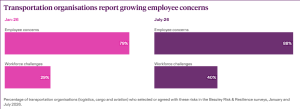
Seafarers operating in conflict zones may live with the threat of attack over prolonged periods, seen in the Strait of Hormuz, where some crew members have found themselves stranded on board vessels for months, unable to disembark or continue their journeys.
The implications extend beyond employee wellbeing. Stress, fatigue and anxiety can affect judgement and decision-making, increasing operational risks at a time when vessels are navigating highly complex situations. Crew welfare is therefore becoming a risk management issue as much as a people issue.
Every time there’s a geopolitical incident, for the crew onboard, these situations can be psychologically traumatising. If this is not addressed, the likelihood of human error will increase.
Casualty responders also face security threats, slowing rescue and recovery operations and increasing their complexity. As critical waterways become more contested, protecting the people who operate in them is becoming as important as protecting the assets themselves.
Visibility and intelligence are as important as physical protection
As geopolitical uncertainty becomes a more permanent feature of global trade, maritime organisations are investing heavily in the kind of resilience that can withstand this type of localised grey-zone conflict.
Access to real-time intelligence is becoming increasingly important, particularly amid growing concerns about electronic interference, GPS spoofing and the need to “go dark”. Shipowners and insurers are seeking better visibility of vessel movements, emerging threats and changing geopolitical conditions to support faster decision-making and safer operations.
One emerging innovation uses satellite-based analysis to identify and track vessels through unique vibration signatures, helping organisations maintain visibility even when conventional tracking systems have been switched off.
At the same time, shipowners are increasing investment in crisis-response training and emergency response programmes, recognising that resilience depends as much on people as technology.
Ultimately, maritime organisations must now contend with a new generation of risks that are as much about human judgement and decision-making as they are about emerging technologies and geopolitical threats. Taken together, these measures reflect a fundamental shift in how the maritime sector must manage risk in an increasingly contested operating environment.
Read Beazley’s full Spotlight on Geopolitical & Economic Uncertainty report: https://www.beazley.com/en-001/articles/spotlight-on-geopolitical-economic-uncertainty-2026
 |
Sundeep Khera, Head of Marine Beazley |
-
Beazley | Navigating geopolitical risks at sea
Maritime shipping faces growing geopolitical threats—missiles, drones, GPS interference, and cyber sabotage—requiring better intelligence, crew welfare, and resilience measures.
-
Zurich | Why resilience will define the winners of Asia’s clean energy transition
Planning for future conditions from the outset can improve operational reliability, reduce potential disruption and protect long-term asset value.
-
Sedgwick | Captives in Asia: From Niche Solution to Strategic Risk Platform
Captive insurance has evolved from niche tool to strategic risk infrastructure in Asia, with connected claims data seen as key to unlocking its full value.
-
BlackRock | Rethink the rules: how TAA and ETFs are reshaping portfolio construction
BlackRock's Daniel Caderas and MSCI's Raman Aylur Subramanian explain why tactical asset allocation (TAA) and exchange-traded funds (ETF) have become essential as global markets fragment and static allocations lose their reliability.