SIRC 2026: New PCC regime to turbocharge Hong Kong’s ILS, captives ambitions: Taiping Re’s Sheldon Yu
November 3 2026 by Aidan Gregory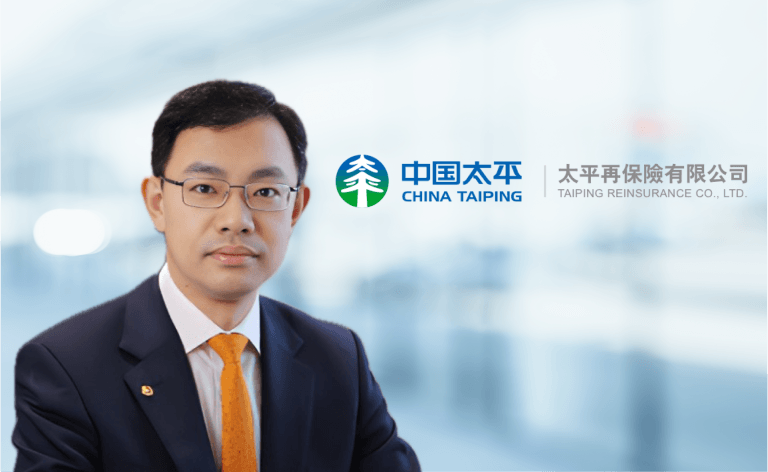
Taiping Re is studying selective expansion of its pioneering ILS program in Hong Kong following the recent moves to introduce sidecars and protected cell companies (PCC) in the territory, according to the Chinese reinsurer’s CEO.
Sheldon Yu said that the reinsurer was actively monitoring the market following the establishment of its catastrophe bond program since 2024 and its recent backing of the first-ever Hong Kong-domiciled sidecar.
“Since Taiping Re established a dual-pillar risk diversification framework combining traditional reinsurance with insurance risk securitisation in 2024, the company has been keeping pace with the ILS market space,” said Yu. “Looking ahead, the company will remain active in ILS market and explore various products to fuel business growth.”
Taiping Re has been heavily involved in the development of Hong Kong’s local ILS market since the establishment of the pilot grant scheme by the Hong Kong government in the 2021-22 budget.
In January 2025, Taiping Re became the sixth company to issue ILS in Hong Kong when it raised US$35 million from the sale of a catastrophe bond via Silk Road Re, its Hong Kong-domiciled special purpose vehicle (SPV). The bond was also the first to be tied to multiple perils and triggers.
In October, Taiping Re was also one of the principal investors in PICC P&C’s HK$94 million (US$12 million) sidecar, the first-ever locally domiciled third-party capital reinsurance vehicle in Hong Kong.
According to Yu, the nascent market is primed for further rapid growth following the Hong Kong government’s recent move to introduce a regulatory regime for PCCs, which make structuring ILS and captives cheaper and easier for insurers as it enables the creation of multiple ring-fenced cells within the same legal entity.
“In the SAR government’s first five-year plan for economic and social development, Hong Kong is strategically positioned as an international risk management centre,” Yu said. “The PCC regime plays a vital role in ILS and captive operation. PCC is a specialised corporate structure enabling the ringfencing of assets and liabilities within a single legal entity utilising multiple cells.
“It reduces transaction cost of launching a new [SPV] for every individual deal and ensures ILS investors in a cat bond or sidecar contract being only exposed to their chosen risk.”
The arrival of the new PCC regime is a “revolutionary breakthrough”, which will enhance Hong Kong’s international competitiveness in attracting captives and ILS issuance, Yu added.
At the coming 1.1 renewals, Taiping Re expects a continuation of the global reinsurance market softening, with an abundance of capital outpacing demand across Asia Pacific following another year of benign insured natural catastrophe losses in the region.
“Driven by strong reinsurance capital, satisfactory underwriting margin, and an absence of market-turning catastrophic losses, overall market pricing is expected to remain under downward pressure, tracking rate reductions in the direct market,” Yu said.
“Cedents are positioned to capitalise on favourable market dynamics to secure higher limits, broader coverage or attritional protection without significantly increasing overall cost.” Sheldon Yu, Taiping Re
Despite overall insured natural catastrophe losses remaining benign in 2026, APAC faces more frequent extreme weather patterns due to the arrival of El Nino, which triggers extreme heat, major rainfall, severe drought and destructive typhoons.
During the Northwest Pacific typhoon season so far, there have been over 30 named storms and 13 typhoons, including 10 very strong typhoons and four violent typhoons, including Typhoon Champi in October, which was the most powerful storm globally this year.
The volatile weather patterns will influence how cedents structure their property catastrophe programs at the forthcoming renewals.
“The pricing of natural catastrophe reinsurance programs shall have the trend taken into consideration,” Yu added. “Renewal prices will remain highly risk differentiated. Accounts or specific layers severely impacted by recent events will have appropriate rate adjustments to reflect the loss.
“At the same time, we expect that cedents would take advantage of the market condition to seek wider protection without substantially raising budget.”
-
BlackRock | Rethink the rules: how TAA and ETFs are reshaping portfolio construction
BlackRock's Daniel Caderas and MSCI's Raman Aylur Subramanian explain why tactical asset allocation (TAA) and exchange-traded funds (ETF) have become essential as global markets fragment and static allocations lose their reliability.
-
BlackRock | Infrastructure comes of age for insurers
Are insurers capturing full value from the asset class? BlackRock shares its perspective.
-
Beazley | Navigating geopolitical risks at sea
Maritime shipping faces growing geopolitical threats — missiles, drones, GPS interference, and cyber sabotage — requiring better intelligence, crew welfare, and resilience measures.
-
Zurich | Why resilience will define the winners of Asia’s clean energy transition
Planning for future conditions from the outset can improve operational reliability, reduce potential disruption and protect long-term asset value.