
Taiping Re’s Polly Ho on typhoons, the GBA and BRI
February 25 2020 by Andrew Tjaardstra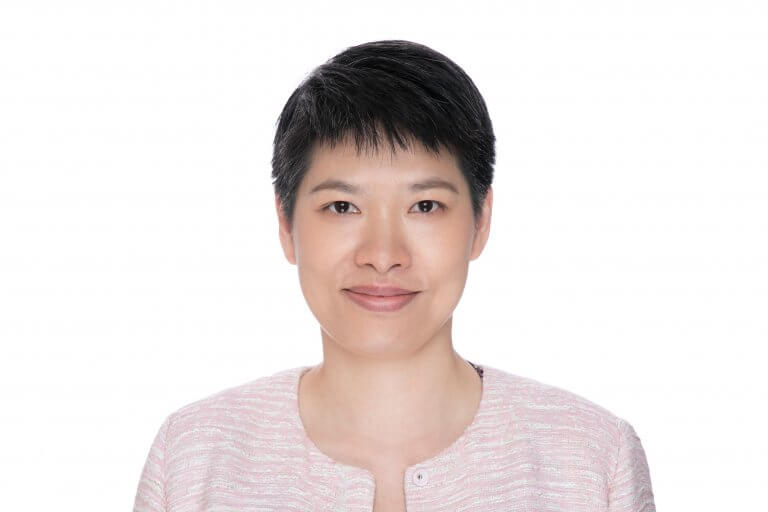
InsuranceAsia News spoke with Hong Kong-based Polly Ho, general manager at Taiping Re. Ho joined the firm in 1990 and took on her existing role in 2016.
Backed by China Taiping Insurance Holdings, the reinsurer has been based in Hong Kong since 1980. The firm has subsidiaries in Beijing and London, a branch in Labuan as well as a representative office in Japan.
InsuranceAsia News (IAN): There have been several record breaking storms to hit China, Hong Kong and Macau over the last few years, what are your reflections?
Ho: The region experienced very strong typhoons in two consecutive years, Typhoon Hato in 2017 and Typhoon Mangkhut in 2018. They led to serious losses to the industry. According to market information, Typhoon Hato caused over US$450 million insured losses to Macau while Typhoon Mangkhut caused over US$390 million insured loss to Hong Kong.
Scientists forecast that there would be more extreme weather conditions due to global warming. Therefore, we expect powerful typhoons to become frequent in the future. This would pose a challenge to the insurance industry.
As a reinsurer we are prepared to cover such risks. We should strive to increase our ability in exposure assessment and risk management to respond to the impacts of natural catastrophes. Moreover, it is important that reasonable terms and conditions could be imposed. Only with risk commensurate premium, the market could cope with the exposures.
IAN: How is Taiping Re working with insurers, governments and insureds to help improve risk management from nat cats?
Ho: Some insurers suffered meaningful retained losses in Typhoon Hato. Being responsive to the demand for an effective reinsurance solution, Taiping Re provided advice on risk assessment, retention setting and treaty reinsurance programme design to our clients. Those arrangements served the risk management purpose well when the market was hit by Typhoon Mangkhut in the following year.
Taiping Re also support government driven natural catastrophe insurance. We have actively and broadly participated in the Macau reinsurance market for a considerable period of time. After Typhoon Hato, we have worked with Macau SAR government and local insurers exploring new natural catastrophe insurance for SMEs.
Our expertise from various functions has dedicated in that project, such as, data analysis, underwriting assessment and claims management. The company’s proposal has been accepted and the product was successfully launched in August 2019. The arrangement fills the protection gap of the market and enhances society’s post-disaster recovery.
IAN: How is Taiping Re leveraging opportunities from the One Belt One Road initiative?
Ho: Hong Kong has unique advantages to be the super-connector under the One Belt One Road Initiative (BRI). The government has positioned Hong Kong as a risk management centre and reinsurance plays a key role in this regard.
Taiping Re is one of the founding members of the Belt and Road Insurance Exchange Facilitation (“BRIEF“), a platform established by Hong Kong’s Insurance Authority. The platform brings together the expertise with the aim of realising the manifest opportunities of the BRI for Hong Kong’s market.
According to a report by Swiss Re, it is projected that the BRI associated projects in countries outside China would create demand for commercial insurance with total premiums accumulated to US$28 billion by the year 2030. Out of which, about US$16 billion insurance premiums would be written by insurance companies in the Mainland.
Taiping Re is a member of China Taiping Insurance Group which is a state-owned financial conglomerate with international operation network. Leveraging on our background as state-owned enterprises’ strategic partner to take on BRI projects, Taiping Re has participated in a number of remarkable accounts. Moreover, most of the BRI projects involve high complexity specialty risks – technical advice in managing or transferring such risks is important.
Our four decades of professional experience in international markets and cross-border licences with global service support network enable us to strengthen our position to grasp the opportunity. We are also willing to work together with other organisations to promote experience sharing or form alliances to facilitate networking for capturing opportunities arising from BRI.
For example, we have cooperated with professional institutions to carry out the Belt & Road countries disaster and risk research so as to enhance the risk management capabilities and explore innovative risk management approaches.
IAN: How do you foresee the Greater Bay Area developing for the insurance community?
Ho: The Greater Bay Area (GBA) development plan is a hot topic. According to market statistics, total premium written in the 11 cities in GBA amounted to US$116 billion which is equivalent to about 25% of the Mainland’s total premiums. Therefore, for the insurance community, there is huge potential in the GBA.
However, we also face various challenges, for example, we are talking about three different legal systems, regulatory frameworks, currencies and tax rules. It would take some time to sort out these issues. Nevertheless, the insurance authorities of Mainland China, Hong Kong and Macau are committed to support the development and efforts have been made to overcome those challenges.
The scale effect of intrinsic cohesiveness of the “Bay Area Economy” will make the GBA an important business platform. For example, medical & health cover and life assurance are lines of business with big demand. If Hong Kong’s insurers could provide secure and suitable cover, they could capture a huge market.
In the long run, I believe the GBA could be a new growth engine to the market. To seize the opportunity, market players should take a more active role to understand the market landscape, customer demand and prepare for the market entry. For Taiping Re, we have just obtained the approval to open our Macau Representative Office. It enhances our footprint in the Greater Bay Area and also further strengthens our service to the Macau market.
-
AIA hires ex-HSBC insurance chief Edward Moncreiffe to lead India, Sri Lanka, Australia, New Zealand
- October 23
He will start in the regional CEO role on November 2.
-
Chubb veteran Jay Santos relocates to Singapore as head of property
- October 22
He was most recently deputy property manager for Victoria and Tasmania for Chubb in Australia.
-
Aviso Specialty taps Ashish Bhattacharya as Pacific head of real estate
- October 22
He previously led Lockton's real estate business in Australia.
-
Oneglobal ships in Maxence Servelle to lead Asia cargo
- October 22
Singapore-based Servelle joins from Diot-Siaci, where he was Asia head of marine cargo.
-
Beazley | Navigating geopolitical risks at sea
Maritime shipping faces growing geopolitical threats—missiles, drones, GPS interference, and cyber sabotage—requiring better intelligence, crew welfare, and resilience measures.
-
Zurich | Why resilience will define the winners of Asia’s clean energy transition
Planning for future conditions from the outset can improve operational reliability, reduce potential disruption and protect long-term asset value.
-
Sedgwick | Captives in Asia: From Niche Solution to Strategic Risk Platform
Captive insurance has evolved from niche tool to strategic risk infrastructure in Asia, with connected claims data seen as key to unlocking its full value.
-
BlackRock | Rethink the rules: how TAA and ETFs are reshaping portfolio construction
BlackRock's Daniel Caderas and MSCI's Raman Aylur Subramanian explain why tactical asset allocation (TAA) and exchange-traded funds (ETF) have become essential as global markets fragment and static allocations lose their reliability.