

On a knife-edge, but not a soft market: Lloyd’s Rachel Turk
January 26 2026 by Jon Guy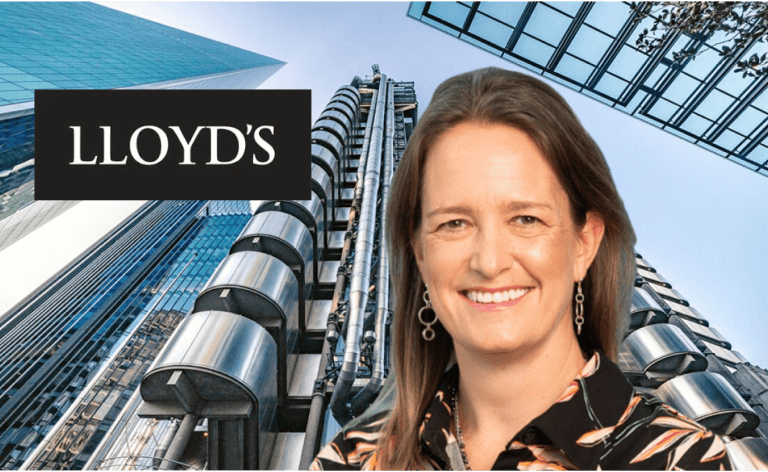
Despite widespread reports of a reduction in premium rates at the 1.1 renewals, Lloyd’s chief of market performance Rachel Turk does not believe that the industry is in a soft market.
The 1.1 renewals this year were primarily highlighted by a shift towards a softer, buyer-friendly market characterised by abundant capacity, increased competition, and double-digit price reductions in property catastrophe lines.
“I believe we have seen some softening, but we are not in a soft market,” Turk told the Fitch Ratings Insurance Insight event in London.
“I think we are on a knife-edge, but if we get a major cyber or natural catastrophe, for instance, things may well change.”
Turk praised the way in which the market was approaching the pricing cycle, and the discipline assured there would not be a return to the decile 10 strategy, where underperforming syndicates were forced to cut their underwriting appetite in difficult classes.
“The discipline I see is really strong,” Turk added. “The lessons of the past have been learned.
“We will not go back to the decile 10 as we can see the discipline in the market.”
Lloyd’s 2026 plan forecasts a gross written premium of GBP67.4 billion (US$90.93 billion) and a net combined ratio of 91.2%.
“This growth is coming from new entrants and structured solutions,” Turk added. “Growth is coming from those syndicates who rated as outperforming and good, so we are confident of the growth.
“The market is cyclical, and the long-term return in capital will be around the 2023-24 number. You have to believe that a return on capital of under 10% is not viewed as attractive, so the aim to return to higher rates is clear. With such a ROC, it is not inevitable that we will move into a soft market.”
A good thing for the market
The rise of broker-led facilities has been the subject of much discussion, but Turk said that on the whole she was a supporter.
“Not a day goes by when we do not talk about facilities,” she added. “I think they are good thing for the market.
“They represent a structural change for the market, and brokers see them as an efficient way to grow.
“Brokers are under pressure to deliver for their shareholders, and they want to assume control of greater parts of the distribution chain.
“These cross-class facilities are bringing in business that would not have naturally come into Lloyd’s, and they will happen whether we like them or not.”
Turk added that the world was as risky as it had ever been and that Lloyd’s was once again being asked to drive innovation and new products, which can then be rolled out to the wider industry.
“The appetite from institutional capital is immense.” Rachel Turk, Lloyd’s
“A case in point is data centres,” she said. “They are a problem that the world and the industry need to address.”
It is estimated that data centres in the Asia Pacific were delivering 23 gigawatts, and that figure would multiply by at least 220% by the end of the decade.
“Lloyd’s can build consortia and line size supported by external capital,” Turk said. “But I also believe there are similar changes for defence, energy and planned infrastructure, all of which need a significant response.”
However, she added that there was no shortage of capital keen to enter Lloyd’s.
“The appetite from institutional capital is immense,” Turk added.
Eye on India
Last week, Turk confirmed that Lloyd’s was in the process of applying for a reinsurance licence to operate from Gujarat International Finance Tech-City (Gift City), India’s first operational smart city and International Financial Services Centre (IFSC).
Turk told InsuranceAsia News that the market was undergoing the process, but clarified that it was doing so following a request from an unnamed syndicate.
InsuranceAsia News understands that the syndicate mentioned by Turk is Niyam syndicate 20147.
“Yes, we are in the process, but this has not been a case of Lloyd’s simply making a decision we want to operate there,” Turk said.
“We have been approached by a syndicate who has asked for our support as they want to operate in India, and we are offering that support by applying for a licence on their behalf.
“We are looking to move to a more demand-led strategy.”
-
A long way from chicken sheds, BESS market comes of age as insurers face new data centres co-location exposure
- October 21
Battery energy storage system (BESS) pricing has fallen sharply, but thermal runaway remains a concern for insurers, Tom Harries, director of energy, power, and infrastructure at broker Amwins, tells InsuranceAsia News' Between the Lines podcast.
-
‘A lot of hunger to grow’: strong reinsurer results drive further softening in APAC, Howden Re’s Andy Souter says
- October 20
Reinsurers face growing pressure to improve terms and offer innovative structures at 1.1 renewals amid intense competition, according to the broker’s APAC head tells InsuranceAsia News.
-
Riyadh attacks test aviation insurers’ appetite for Middle East risk
- October 19
Insurers weigh continued support for aviation clients against escalating war risks after Houthi attacks on Riyadh's King Khalid International Airport destroy six aircraft and threaten Saudi airspace.
-
‘Real step forward’ for Asian ILS as Hong Kong, Singapore eye PCCs
- October 16
Arrival of protected cell companies (PCC) in Hong Kong and Singapore is set to drive the growth of third-party capital in the region, according to market sources.
-
Zurich | Why resilience will define the winners of Asia’s clean energy transition
Planning for future conditions from the outset can improve operational reliability, reduce potential disruption and protect long-term asset value.
-
Sedgwick | Captives in Asia: From Niche Solution to Strategic Risk Platform
Captive insurance has evolved from niche tool to strategic risk infrastructure in Asia, with connected claims data seen as key to unlocking its full value.
-
BlackRock | Rethink the rules: how TAA and ETFs are reshaping portfolio construction
BlackRock's Daniel Caderas and MSCI's Raman Aylur Subramanian explain why tactical asset allocation (TAA) and exchange-traded funds (ETF) have become essential as global markets fragment and static allocations lose their reliability.
-
BlackRock | Infrastructure comes of age for insurers
Are insurers capturing full value from the asset class? BlackRock shares its perspective.