

Asia, home to some of the world’s busiest shipping lanes and largest ship-owning nations, is at the sharp end of a hidden maritime risk.
Post-pandemic machinery-related losses have become an even more significant issue. Mechanical failures can undermine vessel safety, operational integrity, regulatory compliance, reputation, and even financial stability.
The data shows both the frequency and cost of machinery claims are at an elevated level from the pandemic onwards. For average claims above US$10,000, the average machinery claim cost reached around US$400,000 in 2020 and has generally remained at or above that level since, according to The Nordic Association of Marine Insurers’ 2024 mid-year hull report.
The report also indicates that large machinery claims above US$500,000 reached about 1% of vessels in 2019 and have since stayed near or above that level.
Typical machinery claims are propellers, shafts, steering gear, and deck equipment. Given the sustained elevation in both frequency and cost, identifying the causes of machinery losses is essential.
Shipowners should know how to act to mitigate the risk and contain insurance costs.
Causes of machinery losses
There are several reasons explaining the elevated costs and frequency of machinery losses. The pandemic caused a global supply chain disruption, delaying engine parts and key components and thus increasing vessel material costs.
Along with higher commodity prices and labour shortages, there is evidence that this has helped inflate machinery damage claims since the pandemic.
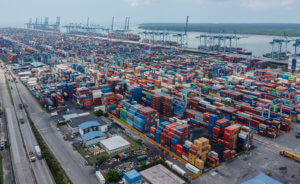 When ports finally reopened, there was a desire to get idle vessels back to sea as quickly as possible.
There was an impetus to recover lost revenue. The general downturn in the global economy during the pandemic, as well as restrictions imposed by governments, led to international maritime trade volumes falling by 3.8% in 2020, according to the United Nations
Conference on Trade and Development.
Operators and owners, keen to benefit from favourable market conditions when operations resumed, prioritised profit over the necessary downtime for maintenance.
Postponement and delays were common. When vessels were sent to shipyards for maintenance and repairs, busy schedules often led to recommendations to repair only essential work or defer maintenance unless critical. This was not without consequences.
Many insurers later found that engine breakdowns had resulted from using parts past their recommended lifespan. These include examples of nuts and bolts being used beyond the manufacturer’s recommendation, making them more likely to fail.
Another issue was parts that were already worn out but still in use. Issues like these can be small in isolation, but in combination, they can potentially lead to significant engine failure.
Crew problems
Another important factor in explaining the losses derives from issues with the vessel crew. Crews spent extended periods at sea during the pandemic.
In September 2020, 400,000 seafarers were stranded at sea, and another 400,000 were unable to join ships, according to estimates from the International Marine Organization.
Being at sea for extended periods can lead to mental and physical fatigue, which increases the likelihood of negligence or lapses in attention when it comes to vessel maintenance and inspection.
“The next major developments impacting machinery will come from technological advancements, particularly those that can address the root causes of the pandemic-related surge in machinery failures.”
The Asia Pacific Economic Co-operation’s report detailing the impact of Covid on the maritime industry, released in June 2024, notes that seafarers stranded on ships were often operating well beyond the 11-month maximum period of service on board, set out in the Maritime Labour Convention, the seafarers’ bill of rights for acceptable work conditions. It notes that many seafarers needed medical care, including mental health support.
The report highlights that mental and physical strain was worsened by the inconsistent distribution of vaccines, despite the heightened need for them due to crew members working in confined spaces on board vessels.
Another major crew issue resulting from Covid was a growing gap in crew experience.
During the pandemic, many crew members returned to their home countries and did not come back. This led to less experienced crews being onboard. Although certified, their lack of practical experience made them less aware of when issues were likely to cause problems.
Insurers taking action
Insurers are taking decisive action to manage industry risks. If a particular account or vessel type consistently suffers machinery-related damages, insurers commonly introduce an additional machinery deductible to encourage shipowners to be equally responsible in  managing machinery-type losses through risk management.
Whilst one may see insurers’ introduction of additional deductibles to protect their own interest, insurers are not stopping there, and some have extended their in-house risk engineers to assist their clients.
The risk engineers often work with external, third-party risk engineers who are well-positioned to offer valuable advice on upkeep and maintenance.
In a “win-win” for both parties, insurers offer risk management surveys to help owners identify potential areas of improvement.
Future-proofing the maritime industry
The next major developments impacting machinery will come from technological advancements, particularly those that can address the root causes of the pandemic-related surge in machinery failures. Specifically, vessels designed or modified for decarbonisation are now using new fuels and technologies.
For example, vessels now have advanced sensors connected to engines to monitor parameters like vibration, temperature, oil quality, and pressure in real-time.
AI-driven analytics analyse the data to predict potential failures before they happen, allowing for timely maintenance.
While some major companies are pursuing innovations, many owners remain cautious. Engine overhauls and retrofitting are expensive.
Therefore, owners are hesitant, especially those who believe it is unclear whether new fuels will achieve widespread adoption backed by clear regulation.
Staying ahead
In summary, the maritime industry is experiencing an elevated level in both the cost and frequency of machinery losses; however, there are measures available to help reduce these risks.
These include working closely with insurers to understand the risks, taking a cautious approach to maintenance reductions, and potentially embracing modern technologies.
The pandemic’s ongoing effects are still impacting claims, highlighting the importance of prompt action rather than delay.
Bo Yu is Markel’s head of claims in Asia.
-
Insurtech: 6 AI trends reshaping the industry
- February 25
AI has become the defining technology of our time, entering the hands of everyday consumers and employees faster than any innovation in recent history. The speed of adoption has been remarkable, mirrored by an equally intense wave of hype, but real business impacts are beginning to surface. What was once the domain of specialised data […]
-
AI: Complexity mismatch amid the case for augmenting the investment office
- January 21
With prudent oversight and strong guardrails, an augmented investment office can allow insurers to confidently ride the private credit boom without being undermined by the complexity they have embraced.
-
W&I: Balancing growth, commerciality and sustainability in Asia Pacific’s W&I market
- November 6
Warranty and indemnity (W&I) insurance is now being utilised with increasing frequency across a far broader range of deal sizes and geographies in the region.
-
Nuclear: Insurance sector’s role in the region’s nuclear renaissance
- October 21
The biggest driver of nuclear expansion in Asia is the massive increase in power demand from data centres, while the real transformation will be driven by small modular reactor technology.
-
BHSI | D&O in Asia in 2026: navigating geopolitics, insolvencies, and digital crackdowns without breaking the bank
A soft market presents organisations with opportunities to strengthen resilience, although the abundance of capacity is unlikely to persist.
-
QBE | Elevating customer experience, humanising claims: QBE Asia’s ‘Solutions in a Box’
Vastly improving turnaround times and personalising service delivery, QBE Asia’s award-winning, end-to-end bundled claims solutions is a game-changer for the insurance industry.
-
Beazley | What does cyber protection look like from day 1 to day 600 and beyond?
Cybersecurity is no longer just an IT concern, but a governance issue that belongs on the boardroom agenda.
-
Sedgwick | Preparing for the next storm
Insurance industry needs to recalibrate, invest in innovation and strengthen systems, talent and data practices.
Bo Yu, Markel
Marine: Amid backlogs and breakdowns, Covid-19 maintenance delays put vessel safety at risk
Bo Yu, Markel