

BHSI | The real risk begins underwater: how subsea risk is changing insurance
August 17 2026
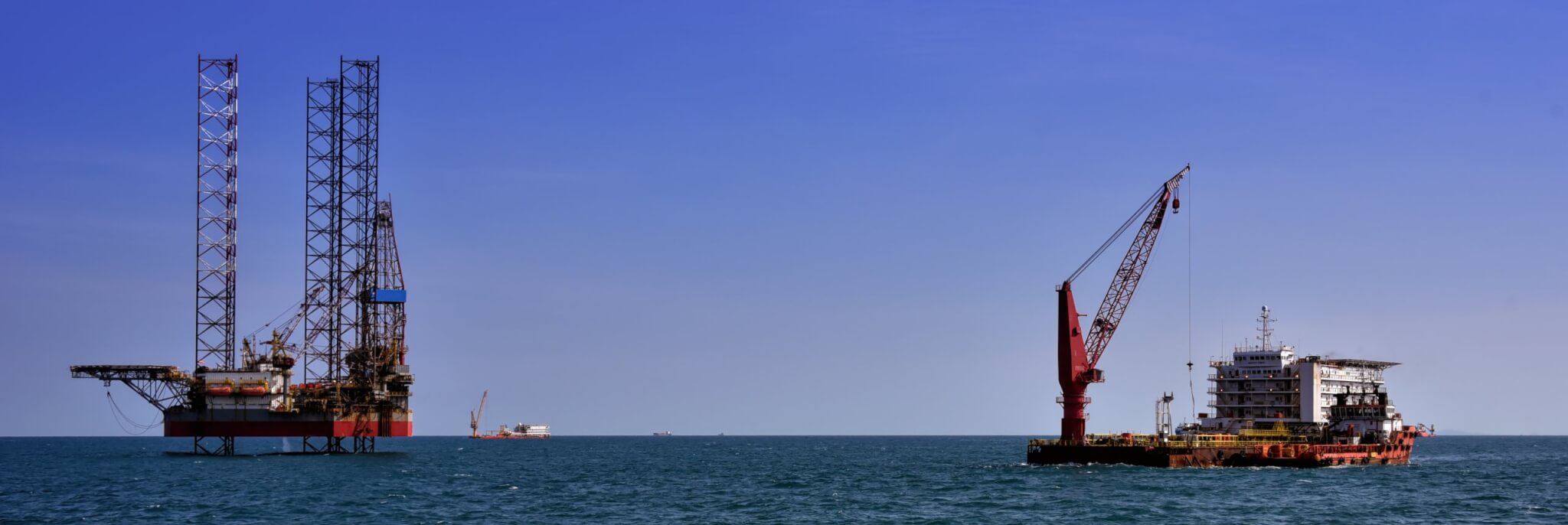
Offshore energy projects were where the specialist subsea insurance market first developed, and while they remain a major driver, they are no longer the only sector requiring specialist subsea equipment insurance.
Marine science organisations, research institutions, and marine alternative energy providers are just a few of the newer industries looking for subsea insurance providers to protect their assets whilst operating subsea.
Established and newer industries rely on a wide variety of specialised subsea equipment to perform their core operations offshore, from remotely operated vehicles (ROVs) and autonomous underwater vehicles (AUVs) to subsea trenchers, ploughs, buoys and a wide and varied array of geotechnical equipment.
Unlike the more traditional classes of insurance, however, when it comes to specialised subsea equipment, the greatest exposures begin after it arrives offshore. A remotely operated vehicle may complete an international voyage without incident, only to be damaged after striking the side of a vessel or its thrusters during launch. Even before entering the water, rough sea conditions can cause equipment to swing unexpectedly during deployment or recovery, increasing the risk of accidental physical damage.
Once underwater, the operating environment becomes even more challenging. Unlike land-based equipment, subsea assets must perform their functions in an extremely challenging environment where direct human intervention is often limited or impossible. An ROV can break free of its tether whilst performing repair, maintenance or inspection operations. An AUV can become entangled in discarded fishing nets or ropes whilst performing a seabed survey or suffer damage after striking submerged objects. Subsea trenchers and ploughs face different challenges, operating under significant loads whilst interacting directly with the seabed, where changing ground conditions, boulders or existing subsea infrastructure can result in damage to the equipment.
The missions may be very different – whether supporting an offshore energy project or collecting data for marine scientific research – but the exposure is remarkably similar. These assets spend most of their working lives operating subsea. With poor visibility, variable currents and costly subsea infrastructure to circumvent or interact with, subsea equipment operators are left with little room for error.
Furthermore, if and when something does go wrong, recovering the equipment can be far more difficult and costly than transporting it to the project in the first place.
A different perspective
Specialised subsea equipment is exposed to its greatest risk whilst carrying out the very task it was designed to perform.
Unlike with a typical marine cargo risk, the journey to the project is often the shortest part of the working life of subsea equipment, with the equipment then spending extended periods operating beneath the surface.
Understanding that distinction is fundamental to appreciating why subsea equipment requires a different approach to risk assessment.
As investment in offshore energy, marine renewables, and oceanographic data collection continues across Asia, the scale and complexity of underwater operations are increasing.
At the same time, the value of specialised subsea equipment is also increasing, making a single incident capable of disrupting not only the equipment itself, but also the wider project it supports.
Understanding the risks that specialised subsea equipment is exposed to, and the wider operations it supports, is becoming just as important as understanding the equipment’s value.
This is why insuring specialised subsea equipment requires a different perspective from more traditional marine risks.
The equipment’s journey to the project site is only one stage in its operational lifecycle. The same asset may be transported internationally, held in temporary storage, mobilised onboard a vessel and spend weeks carrying out underwater operations before being recovered to the surface.
Exposed
As subsea technology continues to evolve, insurance products need to adapt to reflect that transition and cater for the wide range of operational exposures encountered throughout its operational lifecycle.
The growing use of subsea technology across Asia is changing the way these risks should be assessed.
Insurance underwriters increasingly need to look beyond the value of the equipment itself to understand the complexities of the subsea operations being performed, the challenging conditions in which they operate, and ensure that coverage and policy wording recognise these exposures.
At BHSI, we understand that this evolution of subsea technology and operational exposures highlights the importance of understanding not only how specialised subsea equipment is transported, but also how it is deployed, operated and recovered.
As subsea activity continues to grow across Asia, we expect underwriters will also need to evolve alongside the industry’s changing risk landscape.
 |
Julia Joes Head of Marine BHSI Asia |
Berkshire Hathaway Specialty Insurance Company (incorporated in Nebraska, USA) provides commercial property, casualty, healthcare professional liability, executive and professional lines, transactional liability, surety, marine, travel, programs, accident and health, employer stop loss, homeowners, and multinational insurance. The actual and final terms of coverage for all product lines may vary. In the Asia Middle East region, it underwrites on the paper of Berkshire Hathaway Specialty Insurance Company, which holds financial strength ratings of A++ from AM Best and AA+ from Standard & Poor’s. Based in Boston, Berkshire Hathaway Specialty Insurance has offices in Atlanta, Boston, Chicago, Columbia, Dallas, Houston, Indianapolis, Irvine, Los Angeles, New York, Plymouth Meeting, San Francisco, San Ramon, Seattle, Stevens Point, Adelaide, Auckland, Barcelona, Brisbane, Brussels, Calgary, Cologne, Dubai (Regulated by the Dubai Financial Services Authority), Dublin, Frankfurt, Hamburg, Hong Kong, Kuala Lumpur (Licensed by Labuan FSA as a General Reinsurer – IS2016165), London, Lyon, Macau, Madrid, Manchester, Melbourne, Milan, Munich, Paris, Perth, Singapore, Stockholm, Sydney, Toronto, and Zurich.
-
Beazley | Navigating geopolitical risks at sea
Maritime shipping faces growing geopolitical threats—missiles, drones, GPS interference, and cyber sabotage—requiring better intelligence, crew welfare, and resilience measures.
-
Zurich | Why resilience will define the winners of Asia’s clean energy transition
Planning for future conditions from the outset can improve operational reliability, reduce potential disruption and protect long-term asset value.
-
Sedgwick | Captives in Asia: From Niche Solution to Strategic Risk Platform
Captive insurance has evolved from niche tool to strategic risk infrastructure in Asia, with connected claims data seen as key to unlocking its full value.
-
BlackRock | Rethink the rules: how TAA and ETFs are reshaping portfolio construction
BlackRock's Daniel Caderas and MSCI's Raman Aylur Subramanian explain why tactical asset allocation (TAA) and exchange-traded funds (ETF) have become essential as global markets fragment and static allocations lose their reliability.